Managing SaaS expenses is now a top priority for fractional CFO services as businesses face challenges like unused licenses, shadow IT, and auto-renewals. On average, companies lose 25%–30% of their SaaS budgets annually, with mid-sized firms spending millions on unnecessary software. SaaS spend management tools address these issues by offering real-time visibility, automating license tracking, and optimizing renewals. Below are the top 10 tools that help CFOs control costs and improve financial oversight:
- Zylo: AI-powered discovery and spend analysis to reduce shadow IT and optimize renewals.
- Binadox: Tracks SaaS and cloud expenses with multi-currency reporting and cost allocation.
- BetterCloud: Combines security and license management, ideal for compliance-focused teams.
- Zluri: Offers advanced discovery methods and usage tracking for better cost control.
- Torii: Lifecycle automation and shadow IT detection for IT-driven operations.
- Cleanshelf: Focuses on renewal management and detailed spend tracking.
- Spendflo: AI-driven negotiation tools and vendor management for procurement teams.
- CloudNuro: Integrates SaaS and cloud infrastructure insights into one platform.
- LeanIX: Enterprise-focused tool with application portfolio management.
- NachoNacho: Virtual credit cards and exclusive vendor deals for SMBs.
These platforms save businesses 10%–30% of their SaaS budgets annually, streamline processes, and enhance financial control. Choose based on your company size, needs, and existing tech stack. Below is a quick comparison of features and savings potential.
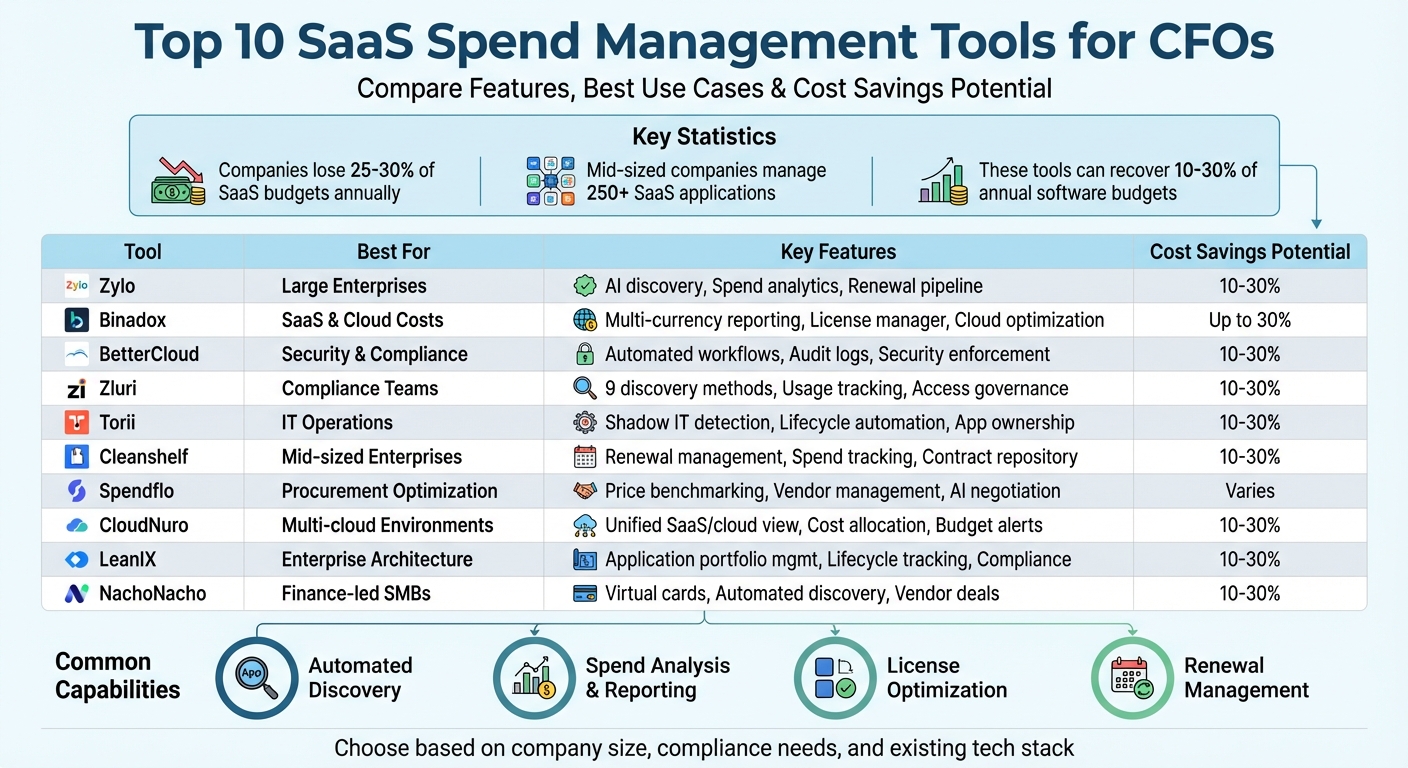
Top 10 SaaS Spend Management Tools Comparison: Features and Cost Savings
What is SaaS Spend Management The Definitive Guide
sbb-itb-85dd802
Quick Comparison
| Tool Name | Best For | Key Features | Cost Savings |
|---|---|---|---|
| Zylo | Large Enterprises | AI discovery, spend analytics, renewals | 10–30% |
| Binadox | SaaS & Cloud Costs | Multi-currency reporting, license manager | Up to 30% |
| BetterCloud | Security & Compliance | Automated workflows, audit logs | 10–30% |
| Zluri | Compliance Teams | Advanced discovery, usage tracking | 10–30% |
| Torii | IT Operations | Shadow IT detection, lifecycle automation | 10–30% |
| Cleanshelf | Mid-sized Enterprises | Spend tracking, renewal management | 10–30% |
| Spendflo | Procurement Optimization | Vendor management, price benchmarking | Varies |
| CloudNuro | Multi-cloud Environments | Unified SaaS/cloud view, cost alerts | 10–30% |
| LeanIX | Enterprise Architecture | Application portfolio management | 10–30% |
| NachoNacho | Finance-led SMBs | Virtual cards, vendor deals | 10–30% |
These tools empower CFOs to eliminate waste, optimize renewals, and gain full control over SaaS spending.
1. Zylo
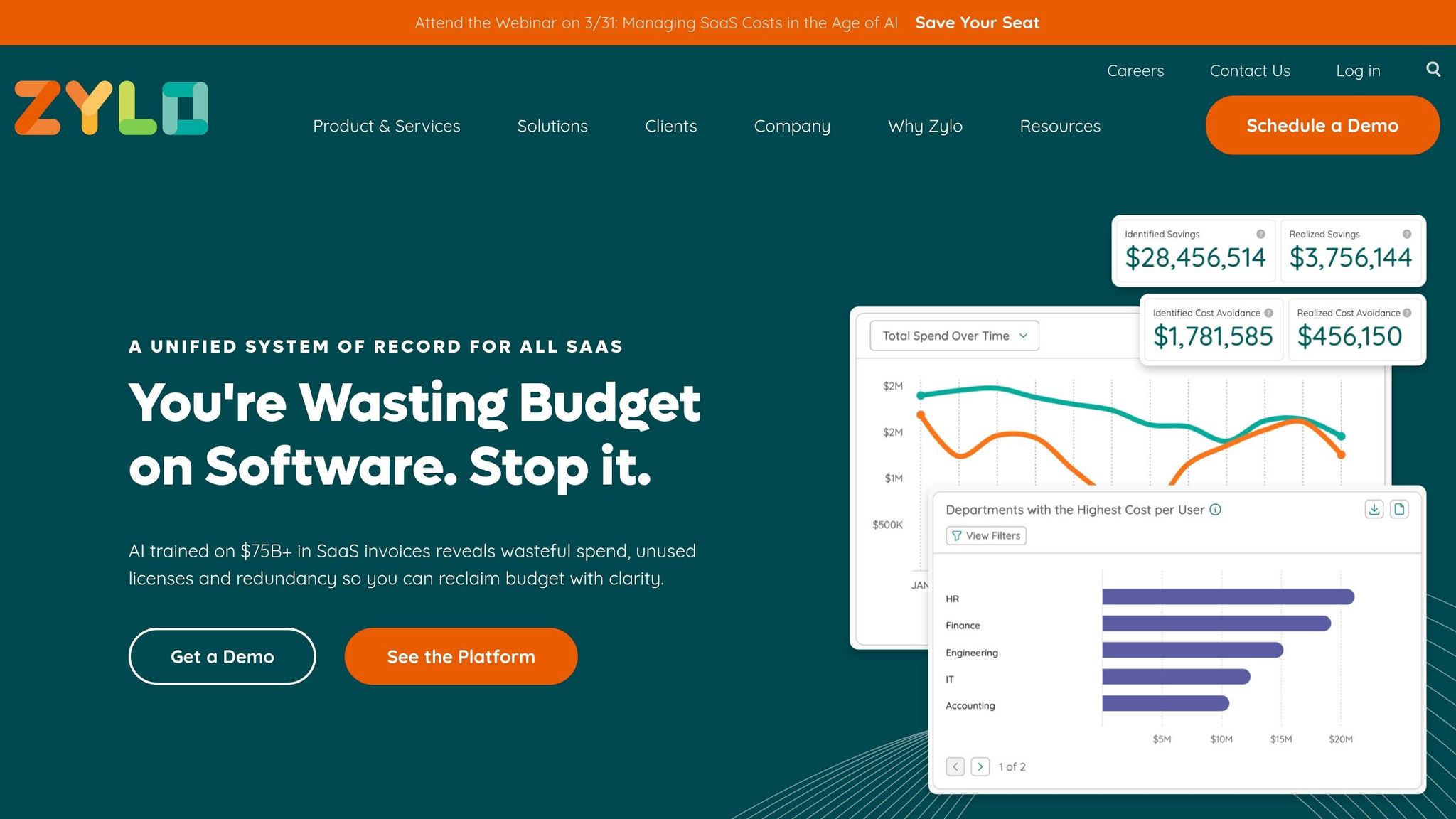
Zylo uses an AI-driven discovery engine, trained on a staggering 75 billion SaaS invoices and 40 million licenses, to continuously scan financial systems, SSO providers, and expense tools. This allows it to identify all applications in use, including shadow IT purchases.
Automated Discovery of SaaS Tools
Zylo seamlessly integrates with ERP systems, accounting platforms, and purchasing tools to compile a complete inventory of software expenses. This gives CFOs a clear picture of actual employee purchases. Jennifer Clark, Global IT Asset Manager, highlights the value:
One thing I love about Zylo is it lets us see what people buy through expense and purchasing.
This detailed inventory forms the foundation for in-depth spend analysis and actionable insights.
Spend Analysis and Reporting
Once visibility is established, Zylo’s advanced reporting tools simplify spend tracking. With AI Smart Data Filters, users can create custom reports using natural language queries. The platform also acts as a centralized financial record, offering real-time insights into spending, budget variances, and cost-center alignment. For personalized guidance on managing these financial complexities, you can schedule a consultation with our advisory team. For example, Adobe doubled its revenue from $9 billion to $18 billion over four years while using Zylo to save millions through cost reductions and avoidance.
License Optimization
Zylo analyzes usage data to detect redundant tools and underutilized licenses. TJ Johnson, Lead Architect for Platform Economics, explains:
We don’t need 42 project management solutions. And so when we go through the process, you start to recognize how many redundant things we have.
In practice, ModMed saved over $1 million by leveraging Zylo’s license tracking and optimization features. This streamlined approach directly informs smarter renewal strategies.
Renewal Management
Zylo’s AI-powered Contract Assist Agent automates the extraction and organization of contract metadata, eliminating tedious spreadsheet tracking. The platform prioritizes renewals based on their potential savings and provides anonymized peer benchmarks to strengthen negotiation efforts. Karen Hodson, Global Procurement & Real Estate Officer at Marigold, emphasizes:
The visibility into your SaaS data that Zylo provides allows people to take action. And when you can take action based on information, you’re making decisions that will then result in savings.
2. Binadox
Binadox uses a layered approach to track software expenses by monitoring financial transactions, SSO logs, and network traffic. It connects directly with corporate cards, bank accounts, and ERP systems to instantly detect subscriptions. Additionally, it analyzes network activity to identify unauthorized "Shadow IT" applications that bypass official procurement channels. This approach enables detailed spend tracking and cost management.
Automated Discovery of SaaS Tools
Binadox goes beyond simple financial tracking with its discovery engine. It automatically detects applications within ecosystems like Google Workspace and Microsoft 365. The platform also provides real-time insights into cloud providers such as AWS, Azure, GCP, and DigitalOcean, consolidating both cloud and SaaS expenses into one dashboard. These tools often reveal 30% to 40% more applications than finance teams were aware of. This level of visibility supports better spend analysis and license management.
Spend Analysis and Reporting
The platform’s Cost Explorer delivers real-time analytics to identify spending trends and spot cost anomalies. It allows for detailed cost allocation by team, department, project, or custom tags, making it easier for CFOs to track expenses and receive industry-specific tax guidance accurately. For global organizations, the multi-currency reporting feature consolidates invoices from around the world into a single reporting currency. Companies using Binadox often cut SaaS and cloud waste by up to 30%.
License Optimization
With its License Manager, Binadox tracks usage over a 60-day period to suggest adjustments like resizing subscriptions or reallocating unused licenses. It flags underutilized, abandoned, and unassigned licenses, enabling CFOs to reclaim and repurpose these resources or cancel them, reducing unnecessary costs.
Renewal Management
The centralized Renewals Calendar gives a clear view of subscription expiration dates and associated costs. Automatic notifications – sent one day and one week before renewals – help prevent unexpected charges. This system allows finance teams to review inactive users and adjust subscription tiers ahead of billing cycles. By combining renewal alerts with budget planning, Binadox helps organizations cut costs by 20–30% within the first year. This proactive approach strengthens overall financial control for CFOs.
3. BetterCloud
BetterCloud combines security oversight with cost efficiency, making it especially useful for organizations that need to meet strict compliance standards. With integrations for over 60 major SaaS applications, it provides a centralized view of your software ecosystem. This helps IT and finance teams identify shadow IT and unmanaged apps that can inflate costs without proper control.
Automated Discovery of SaaS Tools
BetterCloud offers real-time tracking of SaaS usage, inventory, and spending across integrated platforms like Google Workspace, Slack, Zoom, and Dropbox. One key feature is its automated workflows for managing user lifecycles. For example, when an employee leaves or changes roles, the system deprovisions licenses immediately. This helps eliminate unauthorized or overlooked applications that can lead to unnecessary expenses. By consolidating this data, organizations can better manage their software licenses.
License Optimization
Once BetterCloud establishes visibility, it takes cost control a step further by automating license management. Its user lifecycle system ensures that licenses are reclaimed promptly when no longer needed, preventing waste. The platform also allows for fine-tuned permissions, ensuring users aren’t assigned costly, high-tier licenses when a more affordable option fits their role. BetterCloud even promises a 3x return on investment within 90 days of implementation.
Renewal Management
Renewal processes are made simpler with BetterCloud’s data-driven tools. The platform compares contract renewal terms against industry benchmarks, giving CFOs the leverage to negotiate better deals. Before committing to renewals, finance teams can confirm that pricing aligns with market standards. Detailed audit logs and comprehensive reporting features provide the documentation needed for financial reviews and audits. BetterCloud’s performance has been widely recognized, earning leader status in over 30 categories, including SaaS Spend Management, in the G2 Spring 2026 Grid Reports.
4. Zluri
Zluri takes spend management to another level with its advanced discovery system. Using nine different integration methods – including SSO, APIs, desktop agents, and more – it uncovers every SaaS application in use, even the ones that might otherwise fly under the radar. This multi-layered approach ensures a more complete discovery process compared to single-source integrations.
Automated Discovery of SaaS Tools
Zluri’s discovery engine operates continuously, tracking SaaS activity in real time. This is crucial since companies typically use around 254 SaaS apps, but only 45% of these see consistent engagement over a 60-day period. By integrating with your existing systems – such as SSO providers and expense management platforms – Zluri eliminates the need for manual data entry or spreadsheet updates, giving you a full view of your software ecosystem.
Spend Analysis and Reporting
The platform’s centralized dashboard offers real-time year-to-date expense tracking, detailed department-level spend analysis, and "Budget vs. Actual" reports to pinpoint cost overruns and inefficiencies. Zluri also flags hidden fees and overcharges by comparing contract terms with actual expenses. For instance, in 2024, MoEngage saved over $250,000 in just six months by streamlining their SaaS tools through Zluri’s dashboard, which helped eliminate unnecessary purchases and underused software.
License Optimization
Zluri enables precise license management by identifying active versus inactive users at the seat level and analyzing actual feature usage. This allows CFOs to adjust licenses – like downgrading users from premium to basic tiers – based on real engagement data. The platform also simplifies license adjustments during renewals with its "true-up" (adding licenses) and "true-down" (removing licenses) features, ensuring you pay only for what’s needed.
Renewal Management
Zluri’s Renewal Calendar and automated notifications ensure you stay ahead of contract deadlines, with alerts sent 30, 15, 7, and 1 day before expiration. The platform advises starting renewal workflows 60–90 days in advance to strengthen vendor negotiations. With tools like ZOPA (Zone of Possible Agreements) and BATNA (Best Alternative To a Negotiated Agreement), Zluri helps CFOs secure better pricing. Its strong user ratings – 4.8/5 on G2 and 4.9/5 on Capterra – underscore its effectiveness.
5. Torii
Torii takes a "browser-to-budget" approach, combining browser extensions, SSO, ERP systems, and vendor APIs to identify applications that might otherwise go unnoticed. Its lightweight browser extension tracks web activity in real time, uncovering shadow IT and unapproved AI tools that employees may subscribe to outside formal procurement processes. This method reportedly identifies three times more applications than traditional approaches. By doing so, Torii provides a foundation for more thorough spend analysis and proactive budget oversight.
Automated Discovery of SaaS Tools
Torii’s discovery engine uses real-time webhooks to quickly detect changes like new Salesforce licenses or employee departures. By integrating with HRIS platforms such as Workday, it automates "joiner-mover-leaver" workflows, ensuring that licenses are reclaimed as soon as an employee leaves. Additionally, by pulling data from expense reports and payment platforms like Ramp, Torii identifies "shadow spend" before these costs show up in accounting systems. These insights feed directly into the platform’s detailed spend analysis.
Spend Analysis and Reporting
Torii moves beyond static spreadsheets, offering a dynamic ledger that connects costs, usage, and forecasts. Its AI-powered assistant, Eko, enables CFOs to interact with financial data – spotting inefficiencies, drafting policies, and receiving alerts about sudden spending increases. For example, a fintech sourcing lead used Torii’s insights to negotiate a vendor deal, discovering that only 62% of licenses were active and peer organizations were paying 18% less. This data turned a proposed 5% price hike into an 18% discount through a quarterly true-up agreement.
License Optimization
Torii excels in license optimization, using real-time data to take immediate action. It identifies unused licenses and suggests cost-saving downgrades or reallocations. For instance, Shopify implemented Torii’s SaaS automation layer with Okta, reducing offboarding time from two hours to under one minute. This change led to a 90% decrease in orphaned admin seats.
Renewal Management
Torii’s renewal calendar ensures teams are prepared for vendor negotiations by issuing alerts 180, 90, and 30 days before contract expirations. The platform also provides pricing benchmarks and anonymized peer data to help finance teams secure better terms. Recognized as a "Leader" in the 2025 Gartner Magic Quadrant for SaaS Management Platforms, Torii offers three pricing plans – Basic, Professional, and Enterprise – with a free trial available for those looking to test the platform.
6. Cleanshelf
Cleanshelf is a SaaS management platform designed to give fractional CFOs a clear view of software spending. It achieves this through automated discovery, detailed reporting, and timely renewal alerts. By integrating with financial systems and identity providers, Cleanshelf creates a complete picture of an organization’s SaaS usage, helping to identify unnecessary costs and streamline expenses.
Automated Discovery of SaaS Tools
Cleanshelf uses application discovery and Single Sign-On (SSO) integration to find all SaaS tools in use, including shadow IT. By analyzing financial records and browser data, the platform compiles a thorough inventory of subscriptions. This process reveals applications employees may have purchased outside of official procurement channels, which often account for 25–30% of SaaS budget waste annually.
Spend Analysis and Reporting
To help manage expenses, Cleanshelf offers customized reporting and budget tracking tools. These tools enable CFOs to monitor spending by department or business unit. With features like multi-currency reporting and ERP integration, transactional data is automatically consolidated. By mapping expenses to specific departments, teams are held accountable. Organizations using advanced spend analysis can cut manual data preparation time by up to 90%, while real-time benchmarking can boost negotiation outcomes by 15–25%.
License Optimization
Cleanshelf’s usage analytics tracks how licenses are being utilized across the organization. With this data, CFOs can identify unused or underused licenses and take action – whether that means downsizing, reallocating, or canceling seats before renewal deadlines. Reviewing these reports 30–60 days ahead of renewals ensures better decision-making. These insights also integrate into Cleanshelf’s renewal management tools, making contract adjustments smoother and more cost-effective.
Renewal Management
Cleanshelf helps avoid costly auto-renewals with contract management features that include early renewal alerts. A renewal calendar keeps negotiations organized, while quote-based pricing is tailored to business needs. Companies can rely on email support for assistance, ensuring that they only pay for tools they actually use.
7. Spendflo
Spendflo is a platform designed to help CFOs manage SaaS expenses more effectively by using AI-driven automation and negotiation tools. It combines features like automated discovery, real-time spend tracking, and contract intelligence to give finance teams better control over their software budgets. With a 4.7/5 star rating on G2 based on 70 reviews, it’s clear that many users find value in what Spendflo offers.
Automated Discovery of SaaS Tools
Spendflo’s "Spend by Source" analysis is a standout feature that identifies official AP purchases versus employee expense charges. This distinction is crucial since about 35% of SaaS purchases are made through expense accounts. By consolidating all discovered applications into a single dashboard, Spendflo reveals shadow IT, which often accounts for nearly 30% of wasted SaaS budgets.
Spend Analysis and Reporting
Once Spendflo gathers a complete inventory, it turns the data into actionable insights. Using AI and machine learning, the platform analyzes usage patterns, identifies redundant tools, and highlights cost-saving opportunities. Its conversational reporting feature allows users to request procurement data or generate reports with simple text queries. The Sentiment Hub adds another layer by automating employee surveys to assess how critical certain tools are. This helps CFOs decide whether to renew, retire, or renegotiate subscriptions.
Spendflo’s impact is evident in real-world examples. Between 2023 and 2024, Churnzero saved $110,000 in a single year using Spendflo, while a global credit platform saved $500,000 and created audit-ready vendor records. On average, companies report savings of up to 30% on their SaaS expenses.
"With Spendflo, we finally have unified visibility. We can look in one portal and see all our spend, upcoming renewals, and how we’re actually using the licenses we’re paying for."
- Josh Rappoport, VP Finance
License Optimization
Spendflo doesn’t just track software – it ensures that licenses are used efficiently. By monitoring usage at both team and individual levels, the platform identifies underused or overpriced subscriptions. AI agents keep tabs on license activity and employee sentiment. Finance teams can regularly review the License Utilization Rate to downgrade or cancel unused seats. For instance, Drip Capital achieved a 4× ROI and saved over 100 hours of procurement work by optimizing its SaaS stack with Spendflo.
Renewal Management
Spendflo also simplifies the renewal process. Its AI-powered contract intelligence extracts key terms and renewal dates from contracts, creating a centralized record to prevent missed deadlines. The platform sends alerts 30, 60, and 90 days before renewal deadlines, giving teams ample time to negotiate or cancel subscriptions. With access to global SaaS pricing benchmarks, CFOs can negotiate better rates during renewals.
To streamline communication, Spendflo integrates with Slack and Microsoft Teams, allowing procurement requests and renewal approvals to be managed directly within these tools. Urban Company, for example, used Spendflo to manage SaaS contracts for over 1,000 employees and 40,000 partners. This saved them 100 hours of manual work and delivered a 15× ROI in savings.
8. CloudNuro
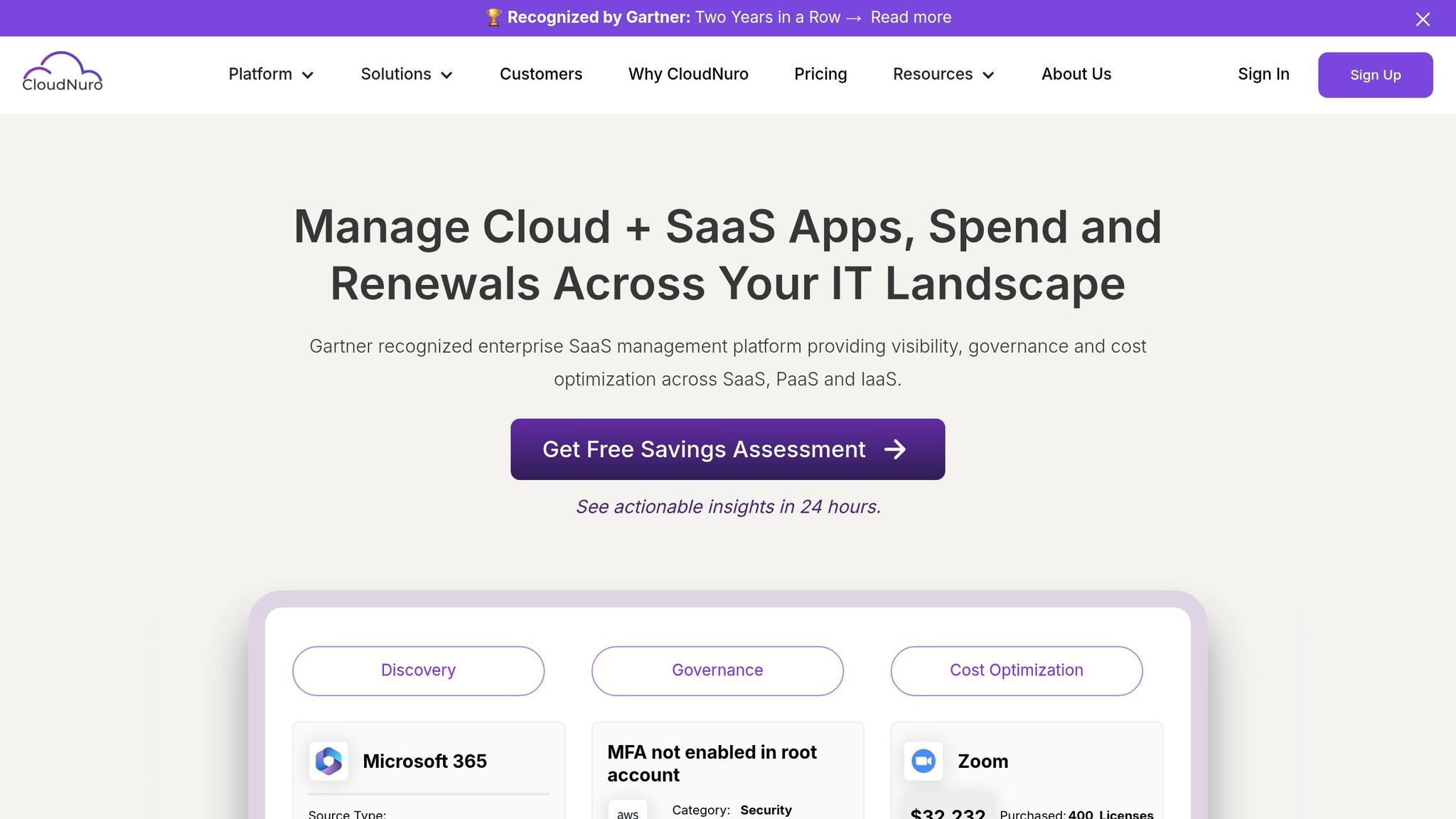
CloudNuro stands out as a SaaS spend management tool that goes beyond software subscriptions. It also integrates cloud infrastructure and AI workloads into a single platform. Recognized in the 2024 Gartner Magic Quadrant and boasting a 4.9/5 rating on Gartner, CloudNuro has made a name for itself in the SaaS management space. Pricing starts at $2,000 per month for the Starter tier, with Growth and Enterprise tiers reaching up to $4,000 monthly [46,47].
Automated Discovery of SaaS Tools
CloudNuro connects seamlessly to IAM sources like Microsoft 365 and financial tools such as Plaid Business, giving users real-time visibility across SaaS, PaaS, and IaaS environments. With over 400 integrations, it eliminates shadow IT and provides 99% visibility into AI workload consumption. Deployment is quick – users can access actionable insights within just 24 hours. This level of transparency enables organizations to dive into precise spend analysis and cost management.
Spend Analysis and Reporting
CloudNuro consolidates all IT spending into a single dashboard, giving CFOs a clear and accountable view of costs. Its chargeback feature assigns expenses to departments, while App Engagement Scores measure software usage, helping finance teams evaluate the true ROI of their investments. On average, organizations see a ~35% reduction in SaaS overspending and over 20% improvement in cloud cost efficiency through FinOps alignment. For example, one healthcare provider cut its Microsoft 365 costs by 18% after using CloudNuro’s optimization tools.
"With CloudNuro we’ve gained unparalleled, continuous oversight of our entire SaaS expenditure. True game changer for our fiscal strategy."
- Joe Hamlin, Network Systems Manager
License Optimization
CloudNuro’s License Gap Analysis identifies unused or underutilized licenses, enabling immediate cost-saving actions. By comparing purchased licenses against actual usage, it highlights inefficiencies. Application-level engagement scores further empower CFOs to make informed decisions during contract renewals, negotiating better terms based on real usage instead of outdated estimates. Khan Tran, CIO & CTO of Avante Health Solutions, shared that CloudNuro simplified SaaS management and saved time by offering a unified view of their IT landscape.
Renewal Management
With a centralized renewals calendar and automated alerts, CloudNuro ensures that no subscription renewal date slips through the cracks. The platform not only tracks renewal dates but also provides advanced notifications, giving teams ample time to review, renegotiate, or cancel contracts. By aligning renewals with actual usage data from its license optimization tools, CFOs gain an edge in vendor negotiations. Additionally, CloudNuro offers a free savings assessment, allowing users to connect up to three SaaS apps and receive actionable insights within 24 hours.
9. LeanIX
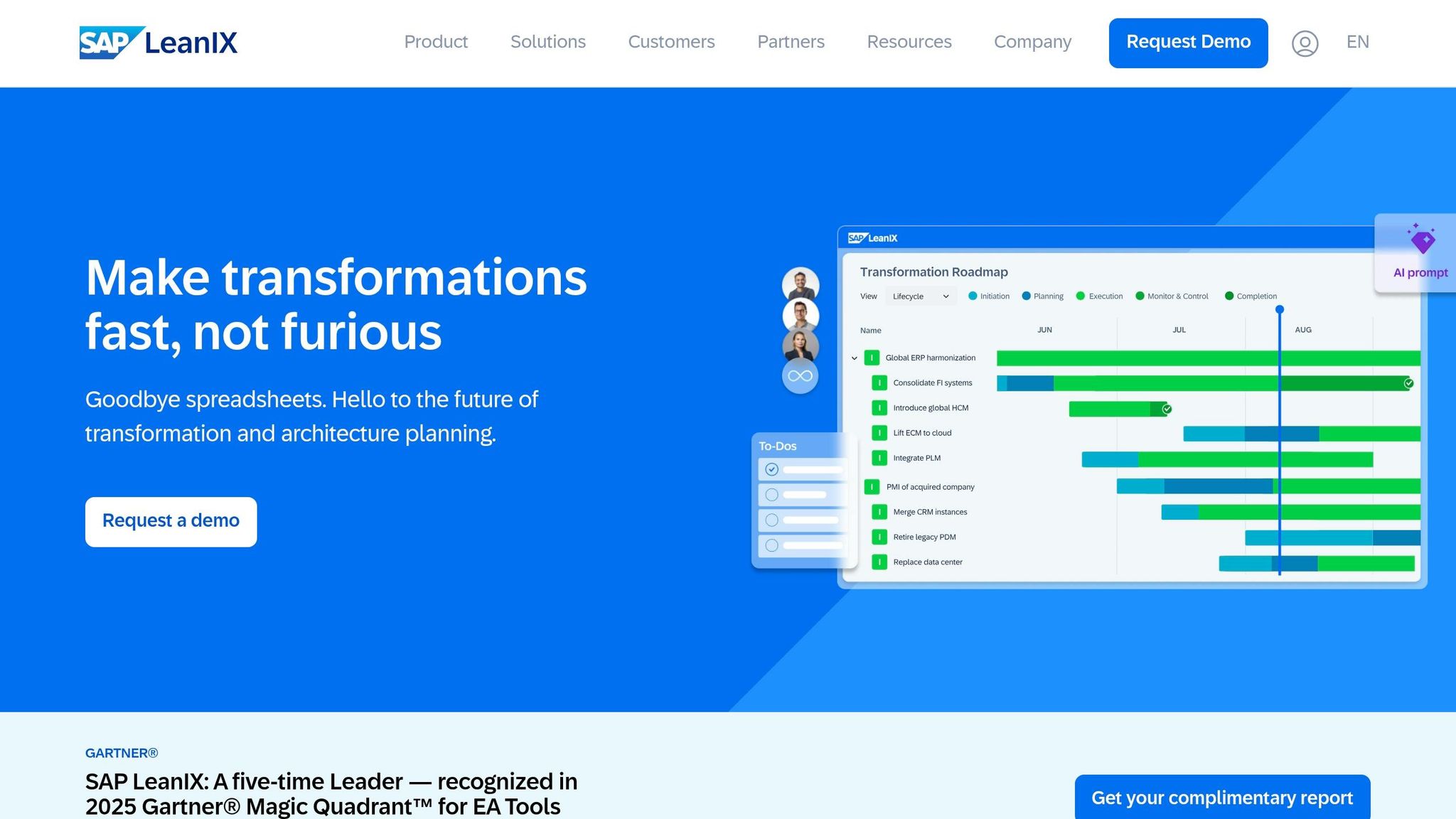
LeanIX, now part of SAP, brings enterprise architecture principles into SaaS spend management through its Application Portfolio Management (APM) framework. This platform addresses a major challenge for CFOs: companies with extensive SaaS usage often waste over 40% of their budget on redundant or underused tools. By creating a clear inventory of the entire tech landscape, LeanIX equips finance leaders with the insights they need to make smarter cost-cutting decisions.
Automated Discovery of SaaS Tools
LeanIX automatically tracks all SaaS applications in use, helping uncover "shadow IT" – software purchased by individual departments without IT’s approval. It flags instances like former employees still having access, tools meant for completed projects, or multiple apps with overlapping functions spread across departments. The platform organizes its findings into four main views: total investment, renewal dates, user counts, and business value.
Spend Analysis and Reporting
Using the Gartner TIME Framework, LeanIX sorts applications into four categories – Invest, Sustain, Migrate, and Eliminate. This helps CFOs streamline their software portfolios based on how well each tool aligns with business needs and technical requirements. Finance teams can dive deeper by analyzing SaaS spend across metrics like total investment (focusing on the 5–10 most expensive apps), renewal timelines, and functional areas. Additionally, LeanIX includes an AI agent hub to monitor and manage AI-related SaaS costs, ensuring that emerging expenses don’t go unnoticed.
License Optimization
LeanIX identifies over-licensed and underutilized applications, allowing companies to adjust contracts based on actual usage. It highlights users who have access to tools they rarely or never use and flags apps with high license counts but low activity. These insights help CFOs eliminate unused subscriptions and overlapping tools, directly improving the company’s financial efficiency.
Renewal Management
The platform monitors upcoming renewal dates, giving teams a chance to reassess the value and pricing of tools before contracts auto-renew. By focusing on applications nearing renewal, finance teams can prevent unnecessary renewals and negotiate better terms. LeanIX emphasizes that effective SaaS optimization requires collaboration across IT, Information Security, and Finance to balance cost savings with security and operational needs.
10. NachoNacho
NachoNacho combines discovery, spend analysis, and license management with a marketplace-first approach. Serving over 25,000 businesses, the platform offers access to exclusive deals from more than 300 software vendors. With savings averaging 30% on subscriptions – and some discounts going up to 90% – NachoNacho is projecting a sixfold increase in subscription revenue by early 2026.
Automated Discovery of SaaS Tools
NachoNacho offers Sherlock, a free monitoring tool that helps track SaaS sprawl. It connects to various data sources to identify shadow IT and unauthorized apps. During onboarding, Sherlock scans past expenditures in minutes to highlight wasted spending and consolidate subscriptions. To complement this, the Sidekick Chrome extension provides real-time insights into unused subscriptions and unnecessary costs directly through the browser, giving finance teams immediate visibility.
Additionally, NachoNacho uses Shaman, an AI-powered recommendation tool, to suggest software tailored to a company’s needs based on usage patterns and size. As Andy Karuza, Head of Marketing at NachoNacho, explains:
Shaman, our AI-powered tool, gets very accurate in terms of what we could recommend for you for maybe an alternative email marketing software that might be better suited for a company at your size at a better price point.
These tools work together to simplify SaaS management and reduce waste.
Spend Analysis and Reporting
NachoNacho’s centralized dashboard streamlines financial management by consolidating all subscription data in one place. This allows CFOs to track spending down to the cent. The platform also integrates with popular accounting tools like QuickBooks, Xero, Sage Intacct, and Zoho Books, making reconciliation and oversight more efficient. Finance teams can search and filter subscriptions to uncover duplicate services and hidden expenses.
License Optimization
The platform’s virtual credit card system gives CFOs control over vendor spending. Each vendor gets a unique virtual card with custom spending limits, ensuring charges don’t exceed agreed amounts. This setup not only isolates billing but also reduces risks tied to vendor-specific data breaches. If a subscription is underused, the linked card can be deactivated instantly, simplifying offboarding in just two clicks. Premium users also benefit from 1.5% cashback on all managed SaaS spending, adding an extra layer of financial efficiency.
Feature Comparison Table
Choosing the right tool depends on your organization’s size, priorities, and existing tech stack. Below is a comparison of 10 platforms, highlighting their use cases, key features, and potential cost savings. On average, dedicated platforms can help recover 10%–30% of annual software budgets within the first year.
Mid-sized companies often juggle 250+ SaaS applications, and 84% of finance leaders consider spend visibility and control essential. These tools cater to that need in various ways – some focus on automation and analytics, others prioritize security and compliance, while a few integrate SaaS management with financial oversight. The table below provides a clear, side-by-side overview of each platform’s strengths and savings potential.
| Tool Name | Best For | Top 3 Features | Cost Savings |
|---|---|---|---|
| Zylo | Large Enterprises | Automated discovery, Spend analytics, Renewal pipeline | 10–30% of budget |
| Binadox | Unified SaaS & Cloud | Cloud cost optimization, License manager, Multi-currency reporting | Up to 30% |
| BetterCloud | Security & Governance | Automated workflows, Security policy enforcement, Audit logs | 10–30% of budget |
| Zluri | Compliance-driven teams | Nine discovery methods, Access governance, Usage tracking | 10–30% of budget |
| Torii | IT Operations | Shadow IT discovery, Lifecycle automation, App ownership tracking | 10–30% of budget |
| Cleanshelf | Mid-sized Enterprises | Renewal management, Contract repository, Spend tracking | 10–30% of budget |
| Spendflo | Procurement Optimization | Price benchmarking, Negotiation services, Vendor management | Varies by contract |
| CloudNuro | Multi-cloud Environments | Unified view of cloud and SaaS, Cost allocation, Budget alerts | 10–30% of budget |
| LeanIX | Enterprise Architecture | Application portfolio management, Lifecycle tracking, Compliance reporting | 10–30% of budget |
| NachoNacho | Finance-led SMBs | Virtual cards, Automated discovery | 10–30% of budget |
Small businesses and startups often benefit from tools like NachoNacho, which use virtual cards to control spending at the point of purchase. Mid-sized enterprises typically lean on procurement-focused solutions, with 85% using spend management tools to streamline operations. For large enterprises, platforms like Zylo and BetterCloud stand out by offering deep visibility into SaaS sprawl.
When selecting a platform, consider how well it integrates with your accounting systems. For instance, QuickBooks and Xero users should look for tools with native sync capabilities. Companies managing both SaaS and cloud services (AWS, Azure, GCP) might prefer unified dashboards offered by platforms like Binadox or CloudNuro. If your company has 75–100 employees and manages 40–80 subscriptions, a dedicated tool can deliver a quick return on investment.
Conclusion
Using the right SaaS spend management tool can provide real-time visibility into spending, allowing finance teams to move from simply cleaning up costs to actively managing budgets. These tools can help recover wasted expenses and simplify invoice processing. In fact, 99% of finance leaders report smoother operations with these platforms in place.
When choosing a platform, focus on your company’s specific needs and size. For example:
- If unauthorized spending is a recurring issue, prioritize tools with approval workflows.
- If manual reconciliation is taking up too much time, look for platforms that offer native accounting integrations.
Smaller companies (50–150 employees) might find free or low-cost tiers sufficient, while larger organizations (300–500 employees) often benefit from tools with IT integration and more advanced approval hierarchies. The right choice can set the stage for integrating these tools into broader financial strategies.
"If you can’t see where money’s going, you can’t run your business effectively." – Finance Yahoo
To maximize the value of these tools, integrate them with strong financial strategies that monitor key metrics like Gross Margin, CAC Payback, and Net Dollar Retention. Fractional CFO services can also play a role in building systems to track these crucial benchmarks, ensuring decisions are driven by accurate data. As Gene Godick, founder of G‑Squared Partners, explains:
"We don’t just produce reports: we help you understand which metrics matter most for your stage, identify the levers that will move them, and build the systems to track progress over time."
FAQs
What’s the fastest way to find shadow IT and unused SaaS licenses?
The fastest way to spot shadow IT and unused SaaS licenses is by diving into the usage dashboards available in your SaaS tools. Pay attention to metrics like login frequency and feature usage reports. Then, compare this data to your licensing costs. This approach helps you identify inactive accounts early, allowing you to cut costs and streamline operations before renewal time.
Which integrations matter most for accurate SaaS spend visibility?
Integrating with tools that provide real-time spend data, expense management platforms, and SaaS usage tracking systems is key to maintaining clear visibility of your SaaS spending. These integrations allow you to monitor and manage expenses effectively by delivering up-to-date insights and usage metrics across your entire SaaS environment.
How far ahead should we start SaaS renewal reviews to avoid auto-renewals?
Start reviewing your SaaS renewals 30 to 60 days before the renewal date. This gives you ample time to assess whether the service still meets your needs, renegotiate terms if needed, or decide to cancel. Taking this step helps you avoid getting stuck with unwanted automatic renewals.